


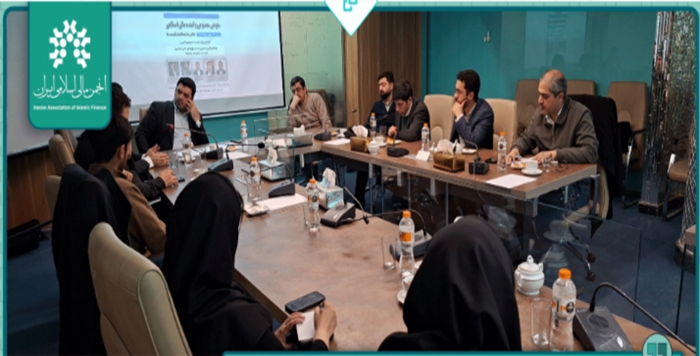
The Iranian Association of Islamic Finance (IAIF) convened the first pre-session of its 11th Islamic Finance Conference on January 21, focusing on "Tokenization of Assets in Islamic Financial Markets: Opportunities, Challenges, and Solutions." The session featured insights from industry leaders, legal experts, and researchers who explored the intersection of Islamic finance, blockchain technology, and digital assets.
The speakers of the session were:
Amir Hamouni, Board Member of Mapna Group and CEO of Fadak Wealth Investment Group;
Soroush Khajeh Haghverdi, Board Member of Karizma Capital Market Services Group;
Hassan Ban, Senior Expert in Decentralized Finance;
Meisam Hamedi, Board Member of Karizma Capital Market Services Group;
Amirhossein Jalali Farahani, Cyber Law Researcher;
Core Opportunities and Compatibility
A central theme was the inherent compatibility between Islamic finance principles and tokenization. Speakers argued that the foundational concepts of asset-backed financing, as seen in instruments like sukuk), are naturally suited for replication on blockchain through smart contracts. There is a strong belief that Iran can leverage its two-decade experience with Islamic capital markets to pioneer a Sharia-compliant digital economy and ecosystem. This is seen as a strategic necessity to avoid falling behind other Islamic financial hubs like Malaysia and Saudi Arabia. Existing legal frameworks, such as the Securities Market Law, already provide capacities for electronic markets and instruments like partnership certificates, which can be adapted for tokens without requiring entirely new legislation. Pilot projects, such as the “Neo Maskan" platform for tokenized real estate crowdfunding, demonstrate practical applications.
Key Challenges Identified
Despite the opportunities, significant hurdles were highlighted:
Regulatory Hesitation and Process Inefficiency: Regulators are perceived as overly cautious, risk-averse, and lagging behind technological innovation. This creates a bottleneck, as lengthy approval processes for traditional financing instruments contrast sharply with the potential speed of tokenized solutions. The existing regulatory "sandbox" was criticized for being impractical.
Infrastructure and Governance Gaps: A major logistical challenge is the need for a dedicated central depository for tokenized assets, as the current single depository is insufficient. Furthermore, organizational structures and governance models within financial institutions are not adapted for the blockchain era, often stifling innovation.
Legal and Competitive Ambiguity: While the legal capacity exists, a lack of cohesive understanding between legislators, supervisors, and executors creates uncertainty. Additionally, tokenization faces indirect challenges from stakeholders in the competing cryptocurrency sector. The civil law-based legal ecosystem, where anything not explicitly permitted is forbidden, also limits the ability to directly copy models from jurisdictions like the United States.
Private Sector Hurdles: Beyond regulation, private startups face debilitating tax issues that can cripple them in their first year, undermining the innovative environment.
Proposed Solutions and Recommendations
Speakers proposed a multi-faceted approach to advance tokenization:
Adopt a New Governance Model: The government should transition from a pre-approval, interventionist role to an ex-post supervisory one. Financial institutions should be empowered as the main actors driving innovation, with regulators focused on oversight and trust-building.
Leverage Existing Legal Tools: Immediate progress can be made by actively using existing instruments like partnership certificates and adapting approved contracts (e.g., exchange contracts, cooperative mechanisms) for tokenization, rather than waiting for perfect new regulations.
Build Specialized Infrastructure: Establishing a second central depository company specifically for blockchain-based assets is a critical step.
Promote Regional and Sector-Specific Pilots: Tokenization could be particularly effective for financing provincial projects (like the successful Baghran Cement model) and solving specific problems such as reducing property dispute litigation through judicially-supervised tokenized deeds.
Foster Confidence and Will: Ultimately, moving forward requires overcoming a culture of fear and hesitation within institutions. Success depends on the determination to implement existing capacities and learn from step-by-step approaches seen in regions like the Persian Gulf.
In conclusion, the conference session presented a clear argument: Iran possesses the Islamic finance expertise, legal foundations, and technological capability to become a leader in asset tokenization. The primary obstacles are not technical but relate to regulatory mindset, procedural inefficiencies, and the need for updated governance frameworks that encourage rather than inhibit innovation. The path forward involves decisive action to adapt current systems, build necessary infrastructure, and allow the private sector to lead within a clear and supportive supervisory environment.